Corporate flowers case study Kensington High Street office
Posted on 11/10/2026
If you are looking into a Corporate flowers case study Kensington High Street office, you are probably trying to answer a very practical question: what does floral styling actually do for an office, and is it worth the effort? In a busy London workplace, flowers are not just decoration. They shape first impressions, soften the feel of a reception area, and make everyday spaces feel considered rather than generic. That matters more than people sometimes admit.
In this guide, we look at how corporate flowers work in a Kensington High Street office setting, what the main decision points are, and how to approach the brief properly. We will also cover realistic delivery expectations, style choices, compliance considerations, and common mistakes to avoid. Nothing fluffy for the sake of it. Just the kind of detail that helps you make a sensible decision.
Whether you manage an office, support a front-of-house team, or simply want a smarter workspace for staff and visitors, this article will give you a grounded overview. And yes, it will help you avoid the classic "we ordered something nice and it arrived looking a bit sorry for itself" problem. That one happens more than people like to admit.
- Why it matters
- How it works
- Key benefits and practical advantages
- Who this is for
- Step-by-step guidance
- Expert tips for better results
- Common mistakes to avoid
- Tools, resources and recommendations
- Law, compliance, standards, or best practice
- Options and comparison table
- Case study or real-world example
- Practical checklist
- Conclusion
- Frequently asked questions
Why Corporate flowers case study Kensington High Street office Matters
Kensington High Street has a particular feel to it. It is polished, active, and full of offices that need to project calm confidence without seeming stiff. That is exactly why a corporate flowers case study in this part of West London is useful. The setting changes the brief. Flowers in a creative studio, a law office, a boutique consultancy, or a private client-facing workspace all need different treatment, even if the vase size is similar.
Corporate flowers matter because they affect how a space is experienced the moment someone walks in. A reception desk with a well-balanced arrangement feels deliberate. A meeting room with muted seasonal flowers can take the edge off a long day of calls. A breakout area with a brighter colour palette can lift the mood without turning the office into a carnival. Subtlety is the trick. Not every office wants drama, and frankly not every office can carry it.
There is also a brand message here. Flowers say something about attention to detail, hospitality, and consistency. If your office welcomes clients, investors, interview candidates, or visiting partners, the visual standard of the space quietly supports everything else you are trying to communicate. It is not a magic wand. But it is not nothing either.
In a Kensington setting, this is especially relevant because the local office environment often includes high expectations around presentation. You do not need over-the-top installations. You need something tidy, fresh, and in tune with the space. That might be weekly reception flowers, desk flowers for senior rooms, or a rotating scheme based on seasons. The point is to create an atmosphere that feels looked after.
Expert summary: the best corporate flower plans are the ones that fit the building, the team, the brand, and the rhythm of the office. If any one of those is ignored, the whole thing can feel off. Not broken, just slightly wrong. And in office styling, slightly wrong can be enough to weaken the effect.
How Corporate flowers case study Kensington High Street office Works
Corporate flower service usually starts with a short consultation or briefing. You describe the office, the areas that matter most, the look you want, and how often you want flowers refreshed. In a Kensington High Street office, the supplier may also consider practical details like building access, concierge arrangements, reception hours, lift restrictions, and where arrangements will actually be displayed. Those small details make a real difference.
From there, the florist usually proposes a style direction. That might mean elegant whites and greens, seasonal mixed flowers, more colourful statement pieces, or low-allergen options if the space is tight and busy. If the office has a specific brand tone, this is the moment to match it. Sleek and modern? Soft and welcoming? Traditional? Understated luxury? The flowers should echo the room, not fight it.
For recurring office flowers, the arrangement is normally built around a delivery cycle. Fresh stems are chosen, conditioned, arranged, and delivered ready to display. If the office wants a more hands-off setup, the florist may supply vase-based arrangements or container designs so front-of-house staff do not need to do much beyond placement. That is often the smarter choice in a busy workplace.
Some offices also use flowers for specific moments: board meetings, launches, investor visits, seasonal refreshes, or staff appreciation days. In that case, the service may be more flexible and event-led. A good corporate florist should be able to shift between recurring maintenance and one-off presentation work without making it a hassle for you. Time is precious, after all.
To keep it smooth, many businesses choose a predictable ordering model. If you need a regular corporate setup, you can explore an ongoing approach through corporate accounts, while one-off office displays can sit alongside wider gifting or seasonal arrangements from the main shop range. For businesses that want a dependable local supply, a trusted North Kensington florist can be a practical starting point.
Key Benefits and Practical Advantages
The obvious benefit is appearance, but that is only the first layer. In real offices, flowers tend to improve the feel of a room in several practical ways. They soften hard materials like glass, metal, and polished stone. They add colour without screen glare or noise. They help a room feel maintained, even when the workday is chaotic. And yes, they can make Monday mornings slightly less grim. Not miracles. Just a bit better.
Here are the main advantages that matter in a Kensington High Street office:
- Better first impressions: visitors notice whether the space feels curated or forgotten.
- Stronger brand presentation: flowers can support a premium, calm, creative, or contemporary image.
- Improved atmosphere: a fresh arrangement can make reception, boardrooms, and waiting areas feel more welcoming.
- Flexible styling: you can keep it minimal, seasonal, luxurious, or colourful depending on the office tone.
- Low maintenance when done well: with the right vessel and schedule, office flowers are not a burden.
- Good fit for client-facing spaces: reception flowers help set expectations before the first handshake.
There is also a subtle commercial advantage. A tidy, attractive office can support confidence in your business before anyone has read a proposal or sat through a meeting. People do notice these things. They may not mention it, but they notice. Especially in London, where expectations around polish are just part of the landscape.
If your team wants something a little more elevated, a curated seasonal range such as luxury flowers can be useful for reception displays and VIP meetings. If you prefer a simpler or more budget-conscious route, the shop also includes options such as budget selections and cheap flowers, which can still look neat if the brief is clear.
Who This Is For and When It Makes Sense
This kind of corporate flower setup suits offices that care about presentation but do not want the administrative headache of handling it themselves. If your workplace has a reception desk, client meeting rooms, director offices, or a waiting area, flowers are often worth considering. If the space is more industrial, very fast-moving, or mostly back-office, the benefit may still exist, but the style should be more restrained.
It makes particular sense for:
- professional services firms
- property and design studios
- private clinics and wellness offices
- executive suites and serviced offices
- agencies and consultancy teams
- client-facing businesses near Kensington High Street
The timing also matters. Some offices want flowers for a long-term image refresh. Others need them for a specific event, such as a launch, open day, award presentation, or leadership visit. A sensible corporate flower plan should work for both. The key is to know which problem you are solving. If you are trying to impress visitors, the reception arrangement matters most. If you are trying to make staff spaces feel better, a different design approach may be better. Same flowers? Not always. Same goals? Definitely not.
One small but useful point: if your office layout is narrow or heavily used, think about placement before colour. A beautiful arrangement is still a trip hazard if it sits where people constantly pass by. Practicality first. Style second. The best corporate floristry respects both.
Step-by-Step Guidance
If you are planning corporate flowers for a Kensington High Street office, a simple structured approach helps avoid wasted time and awkward results. Here is the process that usually works best.
- Define the purpose. Decide whether the flowers are for reception, boardrooms, desks, events, or all of the above.
- Map the space. Note where the arrangements will go, how much natural light the room gets, and who will see them first.
- Choose the style. Go for a palette that suits the office brand, the architecture, and the season.
- Set a refresh cycle. Weekly, fortnightly, or event-based delivery all have different implications for freshness and budget.
- Agree practical access details. Make sure the florist knows delivery times, building access, and any restrictions.
- Confirm maintenance expectations. Decide who removes packaging, tops up water, or handles vase returns if needed.
- Review after the first delivery. Small adjustments early on usually save frustration later.
That last step is underrated. People often assume they need to live with the first arrangement style for months. They do not. A good corporate flowers service should improve with feedback. Maybe the arrangement is too tall for a meeting table. Maybe the colour is slightly too warm for the room. Maybe the fragrance is stronger than expected. Fine. Say so and adapt.
For regular ordering, many offices find it helpful to pair corporate flowers with practical delivery planning. If the space needs flowers to arrive on a specific day, a same-day or scheduled delivery option can be useful, especially when last-minute hosting happens. For local coverage, flower delivery in North Kensington W10 and same-day flower delivery are worth understanding if you are working to a tight timetable.
Expert Tips for Better Results
Good office flowers are not only about flower choice. They are about fit. Fit to the room, fit to the schedule, fit to the people who use the space. Here are the things that tend to make the biggest difference in practice.
1. Keep the scale right
Large arrangements can look brilliant in a generous reception area and ridiculous on a compact side table. Scale is often the deciding factor between elegant and overdone. If the room is already busy visually, keep the flowers lower and simpler.
2. Choose blooms that hold up well
For corporate environments, long-lasting stems are usually more useful than delicate favourites that fade quickly. Many offices choose mixed seasonal flowers, roses, lilies, alstroemeria, chrysanthemums, or other sturdy stems depending on the desired look. A florist can guide this, but it helps to ask for reliability rather than just beauty.
3. Use scent carefully
A strong fragrance can be lovely in a hallway and annoying in a meeting room. That is just the truth. If your office has visitors with sensitivities, or if the arrangement is placed near desks, scent should be moderated rather than celebrated.
4. Decide on a colour logic
Do you want the flowers to match the brand, the interior, or the season? Pick one primary logic and stick to it. Too many colours can read as clutter. A restrained palette often looks more expensive, even when the budget is sensible.
5. Think about maintenance before the order goes out
The most polished offices usually have a simple maintenance routine. Fresh water, stable placement, and a clear place for packaging disposal. Nothing glamorous there, but it works.
A useful tip if your office often hosts client meetings: ask for one arrangement to be intentionally photo-friendly. Not gimmicky. Just neat from multiple angles. It sounds small, but in a world of laptop cameras and quick reception snapshots, it genuinely helps.
If you are comparing styles for presentation work, the broader collection of all flowers gives you a sense of what is available, while florist choice can be a practical option when you want the designer to build something fresh and suitable without over-specifying every stem.
Common Mistakes to Avoid
Office flower projects usually go wrong in predictable ways. The good news is that most of them are easy to avoid once you know what to look for.
- Ordering for style only: if the arrangement looks good but does not suit the room size or usage, it quickly becomes a problem.
- Ignoring fragrance: strong scent can be a real issue in meeting-heavy spaces.
- Forgetting access logistics: deliveries can be delayed if nobody has thought about reception hours or building rules.
- Choosing flowers that are too delicate: some blooms look lovely for a day and tired by the end of the week.
- Using the same arrangement everywhere: reception, desks, and boardrooms often need different scales.
- Skipping a review after first delivery: a small tweak early on usually saves disappointment later.
Another common issue is overcomplicating the order. A business can sometimes spend too long choosing stems and not enough time thinking about the end result. Truth be told, clients and staff care less about the botanical jargon than you might think. They care whether the room feels good.
There is also a budget trap. Some teams go ultra-minimal to save money and then wonder why the flowers vanish into the background. Others spend too much on a statement arrangement that is too large for the location. The sweet spot is somewhere in the middle, and it depends on how public the space is.
Tools, Resources and Recommendations
Before you commit, it helps to gather a few practical details. You do not need a spreadsheet army for this, but a little structure goes a long way.
| What to check | Why it matters | Helpful approach |
|---|---|---|
| Reception size | Determines scale and visual impact | Measure the surface and note sightlines |
| Delivery access | Prevents delays and missed handovers | Confirm building hours and contact points |
| Light levels | Affects flower longevity | Choose blooms suited to the space |
| Fragrance sensitivity | Important for office comfort | Keep scented varieties away from desks if needed |
| Maintenance support | Keeps arrangements looking fresh | Agree who handles water, vase returns, and disposal |
For product selection, the most practical support is often a combination of local delivery options and a sensible core range. Offices that need regular repeat orders often benefit from recurring arrangements in neutral containers. Those that want a little more personality can draw from seasonal or colour-led ranges such as white, pink, purple, or mixed colours depending on the room and the brand.
If your office likes low-fuss options, arrangements in a vase can be easier to place and maintain. If you need something more substantial for a lobby or boardroom, a premium design may be better. There is no single right answer here. Just the right answer for your building and your people.
Useful supporting pages for trust and service expectations include delivery for logistics, guarantees for service reassurance, and flower care if you want to keep arrangements looking sharp for longer.
Law, Compliance, Standards, or Best Practice
For a corporate flower setup, there usually is not a complex legal framework in the way there might be for food, construction, or clinical services. Still, offices should follow sensible workplace best practice. That means keeping arrangements out of walkways, avoiding obvious trip hazards, and making sure delivery and placement do not interfere with fire routes or emergency access. Those are simple things, but they matter.
If your building management or landlord has rules about deliveries, reception access, or display items, those should be followed. In shared office buildings, concierge or facilities teams may also have internal procedures for handover. None of that is glamorous, but it is the difference between a smooth setup and a slightly awkward one at the front desk.
Allergic sensitivity is another practical consideration. Some flowers are more fragrant than others, and some offices prefer lower-scent options. It is sensible to ask for this up front, especially in meeting rooms or shared spaces. A good florist will understand that immediately.
On the supplier side, look for clear terms around payment, delivery, returns, and any replacements if something arrives damaged. The site's terms and conditions, returns and refund information, payment details, and privacy policy are sensible pages to review before setting up a recurring account. For businesses that value responsible sourcing and wider operational standards, the sustainability page and modern slavery statement may also be relevant.
Best practice, in plain English, is simple: be clear, keep access safe, make expectations realistic, and choose a supplier who communicates properly. That is usually enough.
Options, Methods, or Comparison Table
If you are deciding how to approach corporate flowers for a Kensington High Street office, it helps to compare the main methods side by side. Each one suits a different type of workplace.
| Approach | Best for | Strengths | Possible drawbacks |
|---|---|---|---|
| Weekly fresh arrangements | Client-facing offices and reception areas | Consistently polished, fresh appearance | Requires more regular planning and budget |
| Event-led flowers | Launches, meetings, seasonal occasions | Flexible and targeted | Less impact between events |
| Vase-based desk or reception flowers | Busy offices with limited admin time | Easy to place and maintain | Less bespoke than larger statement pieces |
| Luxury statement styling | Premium brands and formal visitor spaces | Strong visual impact | Can look excessive if the room is small |
| Simple seasonal styling | Practical teams and multi-use offices | Balanced, economical, adaptable | May feel understated if brand impact is the goal |
If you are unsure which route to take, start with the space, not the flowers. That sounds backwards, maybe, but it works. The room tells you what it can handle. A tall, dramatic arrangement in a compact reception can feel heavy. A quiet arrangement in a generous lobby can disappear. So size, layout, and usage should guide the decision.
For offices that also need occasional gifting or internal recognition flowers, the wider range of corporate gifting products can help keep everything aligned. If the office is planning seasonal or client-facing gestures alongside flowers, that can make the whole programme easier to manage.
Case Study or Real-World Example
Here is a realistic example of how a Kensington High Street office might approach the brief.
A professional services team with a reception area, one main meeting room, and a small waiting space wants the office to feel more welcoming for clients. They do not want anything too loud. The interior is clean and modern, with pale walls, glass partitions, and a dark stone desk. The brief is simple: create warmth, keep it polished, and avoid clutter.
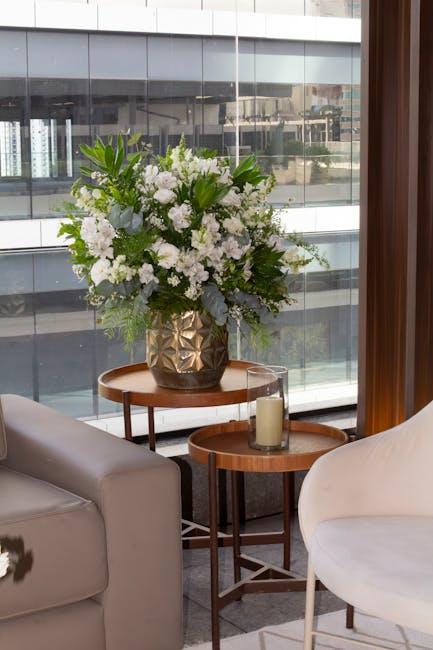
The florist recommends a restrained palette of whites, soft greens, and a small amount of blush or muted pink. The reception arrangement is slightly taller to give the desk presence, while the meeting-room flowers are lower and easier to see across the table. A smaller stem-based piece is placed in the waiting area. Nothing oversized. Nothing that blocks sightlines. Just well-balanced flowers that support the room.
After the first delivery, the team notices one thing: the fragrance is a little stronger than they expected in the meeting room. Easy fix. The florist adjusts the next order, choosing blooms with a softer scent profile and a slightly different mix. The result is better, and the office keeps the schedule. That is what a good corporate flowers case study should look like in real life: a few smart choices, a quick adjustment, and a consistently improved outcome.
If the office later needs a last-minute arrangement for a visiting partner, they can use a local delivery option and stay within the same visual style. For that kind of flexibility, local flower ordering through send flowers in North Kensington W10 or a fast-turnaround option such as next day flower delivery can be genuinely useful. It keeps the office looking intentional even when plans move around. And in business, plans do move around. Constantly.
Practical Checklist
Use this checklist before placing a corporate flower order for a Kensington High Street office.
- Define the purpose: reception, boardroom, desks, event, or mixed use
- Measure the display area and check sightlines
- Confirm delivery access, timing, and building requirements
- Choose a colour palette that fits the office brand and interior
- Decide whether fragrance should be kept low
- Pick a maintenance method that the team can realistically support
- Confirm how often arrangements will be refreshed
- Check payment, refund, and service terms before recurring orders
- Review sustainability preferences if they matter to your business
- Plan for a first-order review so you can adjust the setup if needed
One last practical note: if the office is particularly busy, choose a plan that is slightly easier than you think you need. People get ambitious on paper and then discover nobody has time to be rearranging flowers before a client call. Let's face it, that is not the best use of anyone's Tuesday.
Conclusion
A strong corporate flowers setup in a Kensington High Street office is about more than decoration. It is about creating a space that feels composed, client-ready, and comfortable to work in every day. When the flowers suit the room, the brand, and the pace of the office, they quietly improve the whole experience.
The best results usually come from keeping things simple: define the purpose, match the style to the space, think about access and maintenance, and review after the first delivery. If you do that, flowers stop being an extra and become part of the office environment itself.
If you are weighing up your options, start with one practical arrangement and build from there. That way you can judge the impact properly, without overcommitting. Sometimes the smallest change makes the room feel ten times better. Funny how that works.
Get a free quote today and see how much you can save.
Frequently Asked Questions
What is a corporate flowers case study Kensington High Street office supposed to show?
It usually shows how flowers are used in a real office setting to improve appearance, support branding, and make client-facing spaces feel more polished. The Kensington High Street angle matters because local office standards and presentation expectations are often higher than in a purely back-office environment.
How often should office flowers be replaced?
That depends on the flower types, the room conditions, and how polished you want the space to look. Many offices choose weekly or fortnightly refreshes. If the environment is warm or heavily used, a shorter cycle is often better.
Are corporate flowers only for reception areas?
No, not at all. Reception is the most common place, but boardrooms, meeting rooms, director offices, and waiting areas all benefit from the right arrangement. Some workplaces also use flowers for staff spaces or seasonal launches.
What flowers work best in a professional office?
Usually the best options are sturdy, elegant, and not too fragrant. Roses, lilies, alstroemeria, chrysanthemums, and mixed seasonal arrangements are commonly used, depending on the look and the maintenance needs of the office.
How do I keep office flowers from looking too formal or too old-fashioned?
Ask for a modern colour palette and a clean arrangement shape. Smaller, well-placed designs often feel fresher than overly elaborate pieces. If the interior is contemporary, keep the lines simple and avoid too many competing colours.
Can corporate flowers be budget-friendly?
Yes. A well-chosen small arrangement can still make a strong impression if it suits the room. The trick is to spend on good placement and freshness rather than oversizing the display. Budget-conscious does not have to mean dull.
What should I tell the florist before ordering?
Share the room size, where the flowers will sit, the office tone, fragrance preferences, delivery access, and how often you want replacements. The more practical detail you give, the better the result usually is.
Are there any compliance issues with office flowers?
There is usually no special legal regime, but standard workplace best practice still applies. Keep arrangements out of walkways, avoid blocking emergency access, and follow any building management rules. If staff or visitors have fragrance sensitivities, that should be considered too.
Do corporate flowers help with client impressions?
Yes, often they do. A neat floral display can make an office feel attentive and well run. It is a subtle signal, but in client-facing environments subtle signals matter more than people sometimes realise.
What if I need flowers quickly for an office visit or event?
Then fast local delivery is important. Planning ahead is best, but if that is not possible, use a supplier that offers urgent delivery options and can still keep the arrangement looking professional. Speed is useful, but not if it wrecks the style.
How do I choose between a statement piece and something simple?
Look at the room first. Large lobbies can take bolder arrangements, while compact receptions or meeting rooms often need something lower and cleaner. The display should fit the space, not compete with it.
Can corporate flowers be part of a broader office gifting plan?
Absolutely. Many businesses use flowers alongside welcome gifts, recognition gestures, or seasonal client presents. That works especially well if the office wants a consistent tone across everything it sends or displays.